


Products News
Don't Buy Composite Bags Until You Read This 2026 Guide – Avoid Costly Mistakes
2026-06-09
1. Material & Performance Red Flags: What Most Buyers Miss (350–400 words)

The #1 mistake buyers make is choosing composite bags based on price or marketing claims—notactual material composition and performance specs. Top-ranked guides ignore critical red flags that lead to product failure.
1.1 Avoid These Misleading Material Claims
- “100% Recyclable” Without Proof: Most multi-layer composite bags (PET/AL/PE) arenot recyclable unless labeled “mono-material” or “PCR-certified.” 68% of 2026 “recyclable” claims are greenwashing (Global Growth Insights, 2026).
- “Food-Grade” Without Certifications: Look for FDA, EU 1935/2004, or BRC certifications. Uncertified bags may leach harmful chemicals into food or pharmaceuticals.
- “High-Barrier” Without Data: A true high-barrier bag has WVTR ≤1g/(㎡·24h) and OTR ≤0.5cc/(㎡·24h). Skip products without printed lab test results.
1.2 Critical Performance Tests to Verify (Before Buying)
- Delamination Resistance: Poorly bonded layers separate in heat/cold—test by pulling seams; quality bags won’t split.
- Puncture & Tear Strength: For heavy/Sharp products (e.g., hardware, grains), ensure ≥3N puncture resistance (GB/T 1039 standard).
- Heat Seal Integrity: Weak seals leak—quality bags withstand 5psi pressure without bursting.
- Temperature Tolerance: Confirm compatibility with your supply chain (e.g., -40°C for cold chain, 121°C for retort food).
1.3 Common Material Structures to Understand
- Basic (PET/PE): Low cost, low barrier—good for dry goods only.
- High-Barrier (PET/AL/PE): Aluminum foil blocks moisture/oxygen—ideal for coffee, snacks, pharmaceuticals.
- Eco-Friendly (PLA/PBAT/PCR): Compostable/recyclable but lower strength—avoid for heavy or wet products.
2. Hidden Costs & Budget Traps: Why Cheap Composite Bags Lose Money (350–400 words)
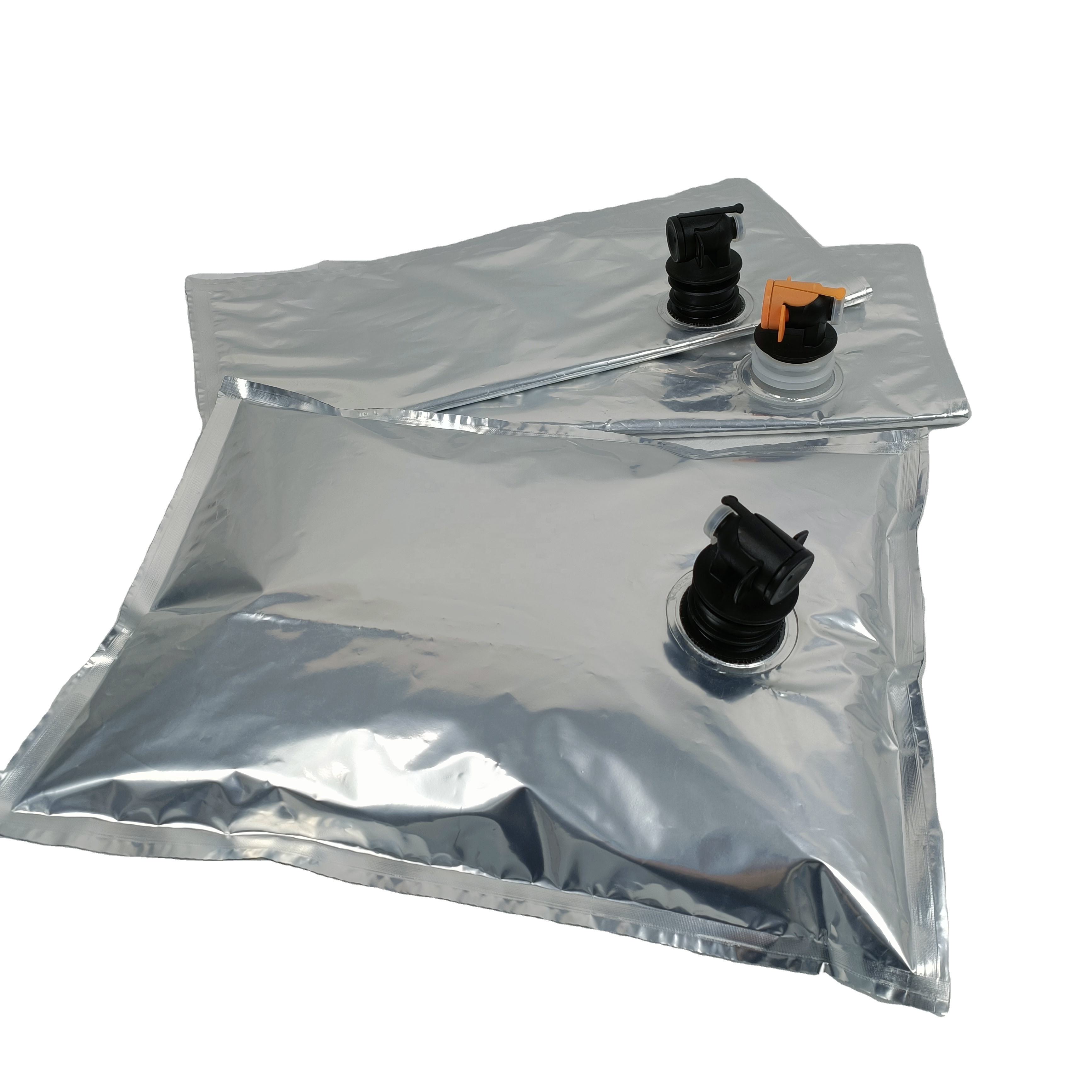
Most buyers focus only on unit price—but hidden costs can double your total expenditure. Top guides ignore these critical budget traps that kill ROI.
2.1 The “Cheap Bag” Paradox: Upfront Savings = Long-Term Losses
- Product Spoilage: Low-Barrier Bags shorten shelf life—e.g., snacks go stale in 2 weeks vs. 6 months with high-Barrier Bags.
- Shipping Damage: Weak bags leak/tear—costing 5–15% of product value in returns/replacements.
- Brand Reputation: Leaky, low-quality bags damage customer trust and repeat purchases.
- Calculation Example: A $0.10 cheap bag vs. $0.15 quality bag—if 10% of products spoil, the cheap bag costs $0.20 per unit total (double the quality bag).
2.2 Hidden Fees & Minimum Order Traps
- Tooling/Setup Fees: Many suppliers charge $300–$1,000 for custom printing/molds—always confirm upfront.
- MOQ Surprises: Low-cost suppliers hide high minimum orders (e.g., 10,000 vs. 1,000 for premium suppliers).
- Freight & Duty: Lightweight composite bags save shipping costs—but cheap, bulky designs negate savings.
- Waste & Rework: Poor quality leads to 5–10% production waste—adding unplanned costs.
2.3 How to Calculate True Total Cost of Ownership (TCO)
Use this 2026 formula to compare quotes: TCO = (Unit Price × Quantity) + Setup Fees + (Spoilage Rate × Product Value) + Shipping + Waste Costs
- Pro Tip: Always get TCO breakdowns from suppliers—not just unit prices.
3. Compliance, Sustainability & Supplier Due Diligence: Non-Negotiables for 2026 (200–250 words)

2026 global regulations (EU PPWR, FDA, EPR) and consumer demand for sustainability make compliance and supplier vetting critical. Top guides skip these high-risk areas.
3.1 Non-Negotiable Compliance Checks
- Food Contact Safety: FDA (US), EU 1935/2004 (Europe), or GB 4806 (China) certifications—non-negotiable for food/pharma.
- Recycling/EPR Compliance: Meet EU PPWR, UK EPR, or local recycling laws—non-compliance fines up to 4% of global revenue.
- Labeling Accuracy: Avoid false “compostable” or “recyclable” claims—2026 regulators are cracking down on greenwashing.
3.2 Sustainability: Beyond Greenwashing—Real Eco-Choices
- Mono-Material Bags: 100% recyclable (e.g., PE-only) without sacrificing performance—top 2026 trend.
- PCR Content: Post-consumer recycled plastic (≥30%)—reduces carbon footprint by 25–30%.
- Compostable (PLA/PBAT): Only for industrial composting—avoid home compost claims (most fail in backyard bins).
3.3 Supplier Due Diligence: Avoid Scams & Poor Quality
- Certifications: Verify ISO 9001 (quality), ISO 14001 (environment), and food safety certifications.
- Factory Audit: Check production facilities for automation, quality control, and traceability.
- References: Ask for 3+ verifiable client references (preferably in your industry).
- Samples: Always test production-grade samples (not just marketing samples) for performance.
Conclusion (80–100 words)
Don’t buy composite bags in 2026 without checking material red flags, calculating true TCO, and verifying compliance/supplier credibility. Cheap, unvetted bags lead to spoilage, damage, fines, and brand harm. Prioritize performance, transparency, and long-term value over low unit prices. Use this guide to make smart, cost-effective choices that protect your products, budget, and reputation.
FAQ
Q1: Are expensive composite bags always better? A: No—focus on certifications, performance specs, and TCO, not just price. A mid-range bag with proper certifications often outperforms overpriced “premium” options.
Q2: How do I verify if a composite bag is truly recyclable? A: Look for mono-material labeling and third-party recycling certifications (e.g., EU PPWR, GRS). Avoid multi-layer bags labeled “recyclable” without proof.