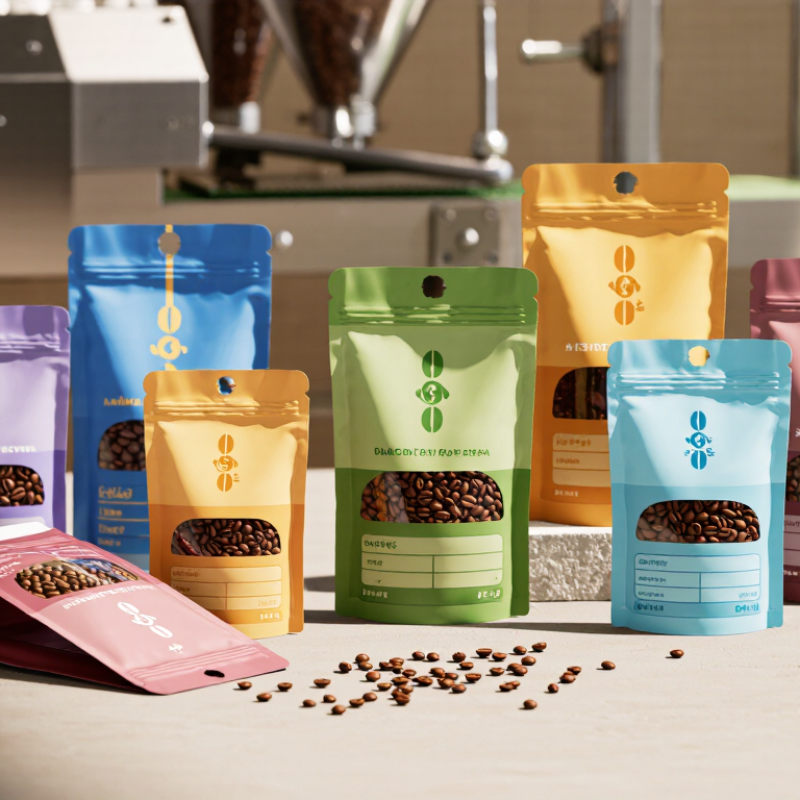
Picking the right Coffee Packaging Pouches for global buyers isn’t just about comparing colors, prices, and printed finishes. The pouch itself has to protect roasted coffee from oxygen, moisture, light, and aroma loss during storage and transport. A bright, eye-catching package might look great on a shelf. But after a few weeks in a hot shipping container? It can still let you down.
Most experienced buyers start with the coffee format and the supply chain. Whole beans, ground coffee, and single-serve products often need different barrier levels, seals, and filling designs. A resealable zipper is handy for home use, while a one-way degassing valve can help release carbon dioxide from freshly roasted beans. You’ll also want to review materials closely—laminate structure, food-contact suitability, recyclability claims, and print durability. These details affect both product quality and customer trust.
Supplier evaluation matters, too. Ask for technical data sheets, production samples, seal-strength results, and batch consistency records. Independent testing can confirm oxygen transmission, moisture resistance, and migration performance. And before you buy, check regional packaging requirements with qualified specialists. They vary more than you might expect.
Cost matters, sure. But the cheapest pouch can end up costing more through damaged seals, stale coffee, or delayed customs clearance. Some early recommendations are just too general. A pouch that works well for a small local roaster may not hold up on a long international route. So test filled samples under realistic conditions and record what happens. This practical step often reveals weaknesses that photos can’t show. In the end, reliable decisions come from evidence, clear communication, and a willingness to revise the spec.
Before selecting a pouch, define the coffee product clearly. Is it whole bean, coarse ground, or espresso-fine? Each format behaves differently during storage and transport. Whole beans need space for aroma protection and carbon dioxide release. Ground coffee loses fragrance faster because more surface area meets oxygen. Roast level matters too. Dark roasts often release gas quickly and may leave more surface oil.
Freshly roasted coffee usually benefits from a high-barrier pouch that limits oxygen, moisture, and light. A one-way valve can release carbon dioxide without allowing air to enter. However, the valve is not automatically necessary for every product. Decaffeinated coffee, older roasted stock, or small retail packs may require different testing. I have seen packaging decisions fail because teams copied a standard pouch without checking roast date and filling conditions.
Pouch size should match the selling unit and the filling equipment. A 250-gram pack needs enough headspace for sealing, but excessive empty space can increase movement during shipping. Strong heat seals help protect the contents after repeated handling. For global buyers, consider temperature changes, humidity, warehouse storage, and long transit routes. Product labels should show the coffee type, net weight, roast information, origin claims, storage guidance, and required local details. Test seal strength, aroma retention, and valve performance before scaling production. Small flaws become expensive later.
Choosing Coffee Packaging starts with the roast, shipping route, and expected shelf life. Oxygen, moisture, light, and heat all weaken coffee aroma. A 2023 International Coffee Organization report recorded global consumption at 177 million 60-kilogram bags in 2022/23. That scale makes small packaging failures expensive.
A PET/PE laminate offers strong seals and good moisture control. Adding aluminum foil improves oxygen and light protection, especially for long sea shipments. However, multilayer structures are harder to recycle. High-barrier mono-PE pouches can simplify recycling systems, but their puncture resistance and barrier performance need careful testing. Paper-based laminates create a natural tactile feel. They often need plastic or mineral coatings to protect roasted beans, which complicates recovery.
For field testing, buyers should request oxygen transmission rate, water vapor transmission rate, seal-strength, and drop-test results. A one-way degassing valve also matters for freshly roasted coffee. I have seen attractive pouches fail at the zipper after rough handling. Appearance is not protection.
The Flexible Packaging Association’s 2024 industry report valued U.S. flexible-packaging sales at about 40 billion dollars in 2023. This shows the sector’s scale, not automatic sustainability. Lightweight pouches usually reduce material use, yet recycling access differs sharply between markets. I would compare the full pouch system, including inks, valves, transport, and local recovery. “Recyclable” can still be impractical. That uncomfortable detail deserves attention.
Coffee packaging begins with the product, filling line, and shipping route. A light roast may release more carbon dioxide after roasting. A dark roast can carry more surface oil. Both need protection from oxygen, moisture, light, and aroma loss.
For most roasted coffee, a high-barrier laminate is a practical starting point. A common structure uses printed PET, aluminum foil, and food-contact PE. Foil provides excellent light and oxygen protection. However, it can complicate recycling and may crease during transport. A metallized film can reduce light exposure with lower material weight, but its barrier may fall after flexing. The Flexible Packaging Association reported flexible packaging sales of about 39.5 billion dollars in 2022, representing roughly 21% of the United States packaging market. This scale shows why material selection now includes end-of-life planning, not only freshness.
Tips: Test the actual pouch after filling. Measure oxygen transmission rate, water vapor transmission rate, seal strength, and drop resistance. For long sea shipments, request barrier data at high humidity. For short local distribution, a foil structure may be excessive. A one-way degassing valve can help release carbon dioxide, but its placement and seal quality need inspection. Small errors matter.
In my experience, suppliers often recommend the strongest barrier automatically. That is not always better. It can increase cost, stiffness, and packaging waste. I would compare three structures using the same roast, fill weight, and storage conditions. Then inspect aroma, valve performance, and seal appearance after several weeks. Shelf-life decisions should follow measured results, not attractive specifications.
| Pouch Structure | Typical Barrier Profile | Recommended Coffee Format | Protection Against Oxygen, Moisture and Light | Recyclability Consideration | Best-Fit Distribution Scenario | Key Selection Notes |
|---|---|---|---|---|---|---|
| PET / PE | Moderate moisture resistance; limited oxygen and light protection unless an additional barrier layer is included. | Short-cycle roasted coffee, local delivery, and products with a conservative shelf-life target. | Good moisture protection; moderate oxygen protection; low light protection because the structure is usually transparent or translucent. | Usually a multi-material structure, so it is generally difficult to recycle through standard single-material plastic streams. | Shorter domestic routes and opaque printed applications where cost efficiency is important. | Use an opaque design or add a barrier layer when coffee may be exposed to sunlight or extended storage. |
| PET / VMPET / PE | High barrier structure using a vacuum-metallized polyester layer. | Whole beans and ground coffee requiring stronger protection during export or longer storage. | High protection against oxygen, moisture, and light when the metallized layer is continuous and properly sealed. | Multi-material construction; metallized film can complicate sorting and recycling. | International shipments, ambient warehouses, and retail products needing a strong barrier at moderate material cost. | Check metallization quality, seal integrity, and compatibility with one-way degassing valves. |
| PET / AL / PE | Very high barrier structure with an aluminum foil layer. | Premium roasted coffee, long-distance export, and products with demanding shelf-life requirements. | Excellent oxygen, moisture, and light protection, provided the foil is not cracked, pinholed, or damaged during forming. | Multi-material and foil-containing; normally not suitable for conventional flexible-plastic recycling systems. | Long export routes, high-temperature logistics, and storage conditions with significant light exposure. | Offers the strongest conventional barrier, but it may have a higher material footprint and less favorable recyclability. |
| PE / EVOH / PE | High oxygen barrier from EVOH; moisture protection depends strongly on the surrounding polyethylene layers. | Roasted coffee where oxygen control is important and a non-metalized appearance is preferred. | High oxygen protection in dry conditions; good moisture protection; limited light protection unless pigments or an outer opaque layer are used. | Potentially compatible with polyethylene recycling systems when designed as a recognized mono-material format and accepted locally. | Markets prioritizing plastic mono-material design and suitable collection infrastructure. | EVOH performance can decline at high humidity, so moisture exposure and the exact layer ratio must be evaluated. |
| Mono-PE High-Barrier Pouch | Medium-to-high barrier depending on the high-barrier coating, film grade, thickness, and seal design. | Roasted beans and ground coffee for markets seeking improved packaging recyclability. | Good moisture protection; oxygen and light protection vary by specification and may be lower than foil-based structures. | Designed for polyethylene recycling where local facilities accept flexible PE packaging and the pouch meets applicable design rules. | Retail programs with documented flexible-PE collection and recycling pathways. | Do not assume recyclability from the “mono-material” label alone; verify local infrastructure and certification requirements. |
| Paper / PE or Paper / Barrier Film / PE | Paper provides appearance and stiffness; the inner polymer or barrier film provides most of the sealing and barrier function. | Short-to-medium shelf-life coffee and products where a natural paper appearance is a priority. | Moisture protection is usually good; oxygen and light protection depend on the inner barrier layer and paper opacity. | Often difficult to recycle as paper because food-contact coatings and polymer layers must be separated during pulping. | Specialty retail, gift packaging, and markets where visual presentation supports product positioning. | Confirm grease resistance, seal strength, humidity tolerance, and whether the paper layer affects filling-line performance. |
| High-Barrier Compostable Film Structure | Barrier performance varies widely by polymer blend, coating, thickness, and compostable certification. | Selected coffee lines targeting certified compostable packaging systems. | Can provide useful oxygen and moisture protection, but performance must be validated for the intended shelf life and climate. | Only compostable in the facilities and conditions covered by the applicable certification; it should not automatically be placed in plastic recycling. | Markets with verified industrial composting access and clear consumer disposal instructions. | Request complete barrier, seal, shelf-life, and certification data; disposal infrastructure is essential to the environmental claim. |
| Pouch with One-Way Degassing Valve | Available with PET/PE, metallized, foil, EVOH, mono-PE, and other base structures; the valve manages gas release rather than replacing the barrier film. | Freshly roasted whole-bean or ground coffee that releases carbon dioxide after roasting. | Maintains the selected pouch’s oxygen, moisture, and light barrier while allowing carbon dioxide to escape without routinely admitting outside air. | Valve material and attachment may affect recyclability; compatibility depends on the pouch structure and local recycling rules. | Global distribution of freshly roasted coffee, especially when filling occurs soon after roasting. | Match valve flow rate, pouch volume, roast profile, fill date, and expected storage conditions; validate with real product testing. |
Selection note: Actual shelf life depends on roast profile, grind size, residual oxygen, filling conditions, seal quality, valve performance, storage temperature, humidity, and distribution time. Barrier values should be confirmed from supplier test reports and validated with finished-product shelf-life testing.
Coffee pouch selection starts with the product’s physical behavior. Whole beans need strong puncture resistance, while ground coffee releases aroma quickly after grinding. A flat-bottom pouch offers shelf stability and a wide filling opening. A side-gusset pouch uses less display depth and suits automatic packing lines. For small batches, a stand-up pouch may reduce setup time. It also gives retailers a clear front-facing panel.
Closures deserve equal attention. A press-to-close zipper helps households protect aroma after opening, but it can slow high-speed filling. Tin ties suit simple formats, though they offer weaker resealing. One-way degassing valves remain important for freshly roasted beans. They release carbon dioxide without allowing much oxygen inside. Filling temperature, powder dust, and valve placement can affect seal quality. Small errors become expensive at export scale. I would test them early.
The Flexible Packaging Association reported U.S. flexible-packaging sales of about $40.3 billion in 2023, showing the sector’s commercial importance. Smithers’ packaging research also identifies lightweight flexible formats as a continuing growth area. However, material choices still need practical testing. A thinner laminate may lower shipping weight but tear during pallet handling. For Cold Coffee Packaging, moisture resistance and leak control become more critical. Trial several pouch sizes, closure settings, and filling speeds before approving production. The best specification is sometimes less elegant than expected.
Choosing coffee packaging pouches for global buyers requires more than attractive artwork. Printing, labeling, and brand consistency must work across languages, markets, and shipping conditions. In my packaging projects, matte finishes often improved shelf appearance, but they sometimes reduced barcode readability under dim store lighting. A test print under real lighting can prevent costly revisions.
For Iced Coffee Packaging, use clear product hierarchy. The coffee type, roast profile, net weight, and preparation details should remain easy to find. Keep essential text away from seals and curved edges. Use high-resolution printing for small nutritional panels and lot codes. Variable data printing can support traceability without changing the main design. However, translation accuracy needs human review. Automated translation can miss cultural meanings or measurement differences.
Tips: Request press proofs before mass production. Compare colors with approved references, not screen images. Check label adhesion after refrigeration and condensation exposure. Confirm required recycling symbols, language rules, and food-contact information for each destination. A single global label may reduce costs, but it can also create crowded artwork. I once underestimated this issue, and the result looked technically correct but difficult to scan. Flexible layouts are safer. Review the pouch with distributors, warehouse teams, and shoppers before approval. Their feedback may reveal handling problems that designers overlook.
Choosing Coffee Packaging Bags for global buyers requires more than comparing price per pouch. Check the destination’s food-contact rules, labeling requirements, recycling guidance, and required testing documents. Ask for migration test reports, material specifications, and batch records before approving production. Requirements can differ between countries, so confirm them with an experienced customs or compliance professional.
Shipping conditions deserve equal attention. Coffee pouches may face humidity, temperature changes, compression, and rough handling during long container journeys. Request oxygen and moisture barrier data, seal-strength results, and drop-test samples. A pouch that looks excellent in a sample room may fail after three weeks in a hot warehouse. Test filled bags, not empty ones. That detail is easy to miss.
Cost calculations should include printing setup, minimum order quantities, inland transport, freight, duties, and possible inspection fees. The lowest quotation may create the highest landed cost. Supplier quality also needs evidence: review factory audits, traceability procedures, corrective-action records, and production samples from different batches. Ask how defects are recorded and replaced. Small wrinkles matter. I still leave a margin for unexpected delays because spreadsheets rarely capture every shipping problem. A clear approval sample, written tolerances, and scheduled inspections make Coffee Packaging Bags easier to buy with confidence.
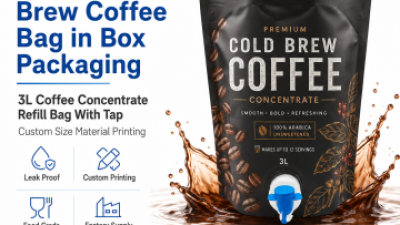
The growing cold brew coffee market is being shaped by demand for convenient, premium-quality beverages that fit modern retail, foodservice, and home-consumption habits. Industry research highlights the expansion of ready-to-drink coffee, coffee concentrates, and flexible packaging solutions, particularly where longer shelf stability, efficient transport, and easy dispensing are important. A custom 3L food-grade bag-in-box pouch with tap is designed to meet these needs, offering a practical format for cafés, restaurants, offices, catering services, and household use.
Manufactured with leak-resistant materials and available with BRC and ISO 9001/22000 certified production, the pouch helps protect cold brew concentrate and other liquid beverages during storage and distribution. Its lightweight, foldable structure reduces packaging volume compared with rigid containers, while the integrated tap supports controlled pouring and convenient serving. Custom printing, pouch dimensions, and fitting options allow businesses to match their operational and presentation requirements. Factory-direct supply also supports consistent quality, flexible customization, and dependable production for both small-scale applications and growing commercial demand.
PET/PE laminates provide strong seals and reliable moisture control. Aluminum foil improves protection from oxygen and light during long sea shipments. Multilayer recycling remains difficult.
High-barrier mono-PE pouches may simplify recycling in suitable systems. Their puncture resistance and oxygen barrier require careful testing. “Recyclable” is not always practical.
Request oxygen transmission, water vapor transmission, seal-strength, and drop-test results. Test filled pouches after rough pallet handling. Appearance is not protection.
Whole beans need stronger puncture resistance than ground coffee. Flat-bottom pouches stand firmly and offer wide filling openings. Stand-up pouches suit small batches.
Press-to-close zippers help protect aroma after opening. They may slow high-speed filling lines. Tin ties are simpler but reseal less effectively.
Freshly roasted beans release carbon dioxide after roasting. A one-way valve lets gas escape while limiting oxygen entry. Placement matters.
Request a physical press proof before mass production. Check barcodes under dim store lighting. Screen colors can mislead.
Keep roast profile, net weight, and preparation details easy to find. Review translations with people, not software alone. Local rules can differ.
Test moisture resistance, leak control, and label adhesion. Expose samples to refrigeration and condensation. Cold conditions reveal weak seals.
Compare material, inks, valves, transport, and local recovery together. A thinner pouch may reduce shipping weight but tear during handling. I sometimes favor elegant designs too quickly.
Choosing the right Coffee Packaging Pouches begins with clearly defining the coffee product, roast type, shelf-life goals, and filling conditions. Buyers should compare materials according to freshness protection, durability, appearance, and sustainability, then select a pouch structure with suitable barriers against oxygen, moisture, light, and aroma loss. The package format should match product volume and sales channel, while closures such as zippers or valves can improve usability and freshness after opening.
Global buyers should also consider filling equipment, printing quality, labeling space, and branding consistency across different markets. Before placing an order, evaluate pouch performance under shipping conditions, storage temperatures, and long-distance transportation. Cost should be assessed together with material quality, production capacity, lead times, and supplier reliability rather than viewed as the only deciding factor. Careful attention to packaging specifications, documentation, and quality control helps ensure that the final pouches protect the coffee, support efficient distribution, and present a professional image in international markets.