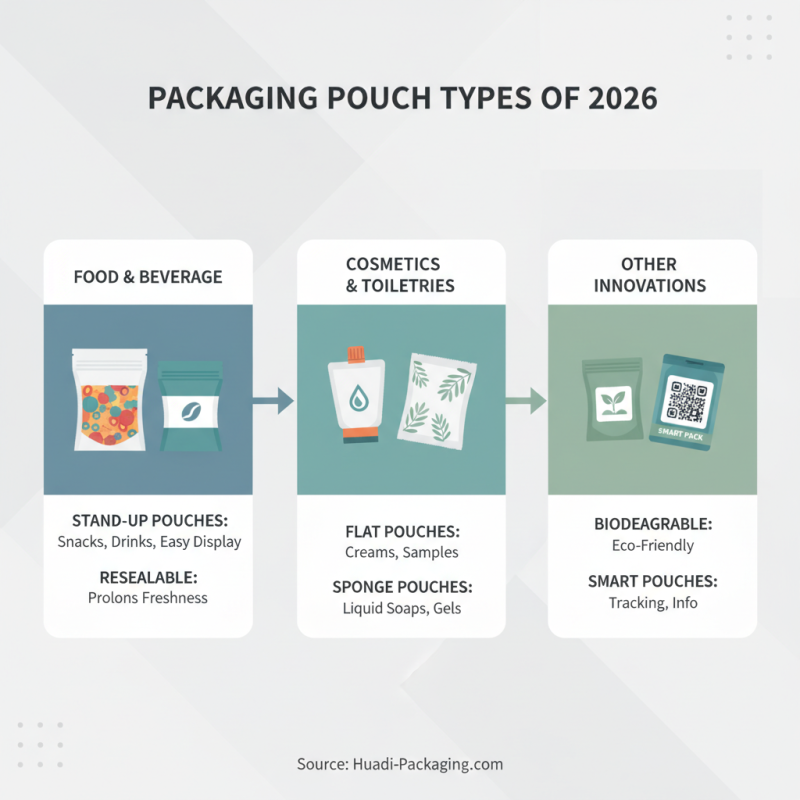
By 2026, the variety of pouch types out there has never been more impressive. You know, different products call for different kinds of packaging, and companies like FlexPack and EcoPouch are really pushing the boundaries with some cool innovations. Each pouch type brings its own set of perks, designed to suit specific needs.
Take stand-up pouches, for example—they’re super practical for food items because they stand neatly on shelves and give you a good look at what's inside. On the other hand, resealable pouches are a lifesaver for snacks—gotta love that easy access! But honestly, choosing the right pouch isn’t always straightforward; pick the wrong one, and it might lead to wasted money, or even annoyed customers. The materials and designs truly matter here.
As we get into the different types of pouches, it’s pretty clear there’s still room to grow. There’s a big need for more eco-friendly options that don’t sacrifice quality, you know? The packaging world’s changing rapidly, but it’s not all smooth sailing. Exploring these pouch options really sparks a conversation about balancing sustainability with innovation—something we definitely need to keep working on.
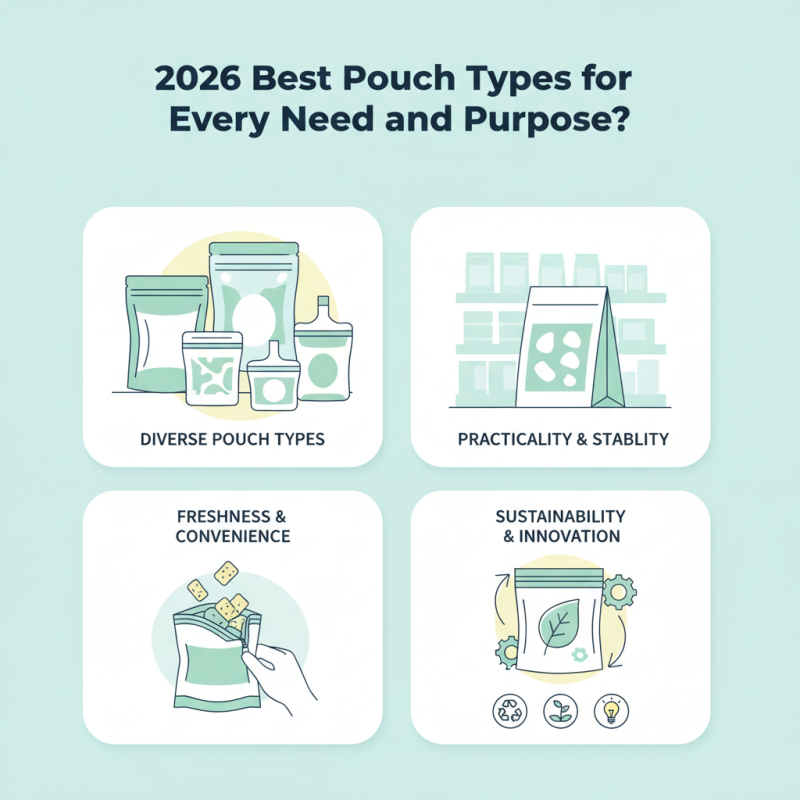
In 2026, consumers will encounter a variety of pouch types. These Packaging Bag Types cater to diverse needs. From food storage to cosmetics, each type serves a unique purpose. The stand-up pouch is popular for snacks and beverages. Its design allows for easy display on store shelves. Resealable features keep products fresh longer.
Then there are flat pouches, ideal for single-use items. They take up less space and are lightweight. Many people overlook their versatility. When shopping, it’s easy to miss options that fit perfectly in small bags or backpacks. The versatility of a pouch can lead to clutter if not managed well.
Kraft paper pouches come into play for eco-conscious consumers. They combine style with sustainability. However, they may not offer the same durability as plastic options. Reflecting on this trade-off is essential. Lightweight options might not protect fragile items effectively. Understanding these nuances helps consumers make informed choices.
When choosing pouches, material matters. Eco-friendly options are gaining traction. Recycled materials and biodegradable plastics are two popular choices. These sustainable pouches reduce waste and appeal to environmentally conscious consumers. However, they may not always match traditional durability. Some users report issues with sealing and moisture resistance.
Traditional pouches often use plastic derived from fossil fuels. They provide great strength and longevity. Many food products benefit from these durable materials. But, the environmental impact is significant. The recycling process isn't always effective. A combination of both types might be the answer.
Consider your needs carefully when selecting Flexible Packaging Types. Evaluate how each option aligns with your values and requirements. Sometimes, the eco-friendly choice may need a bit more protection. It’s crucial to weigh pros and cons thoughtfully. Embrace the challenge of finding the right balance.
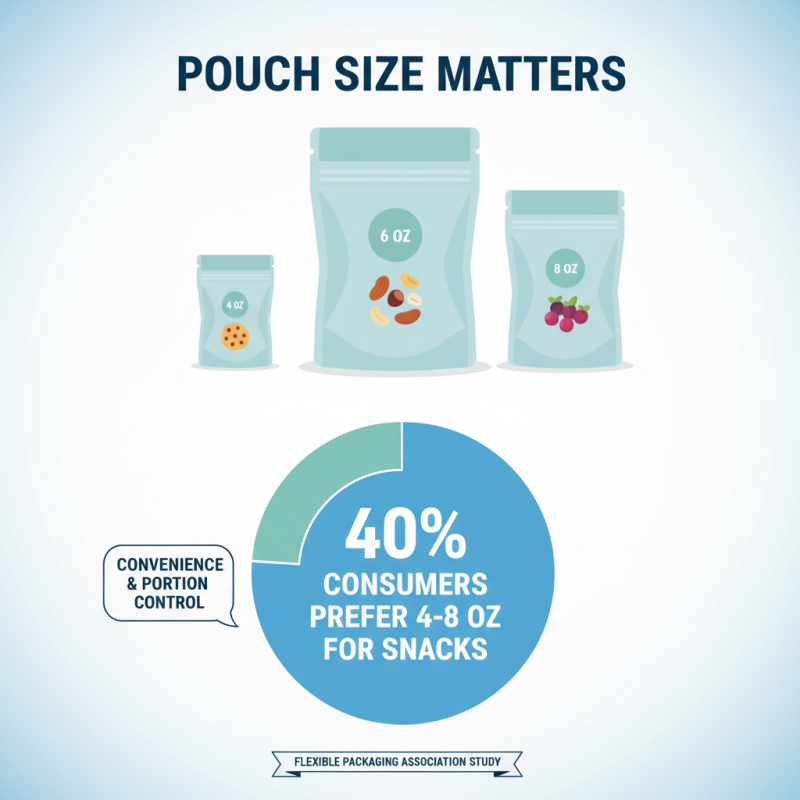
When considering pouch dimensions, size and capacity are crucial. Different needs require specific pouch types. For instance, a study by the Flexible Packaging Association highlights that 40% of consumers prefer pouches between 4-8 ounces for snacks. This size balances convenience and portion control.
Medium-sized pouches, around 12-16 ounces, are ideal for bulk items. They provide room for products while maintaining manageability. A report from the Packaging Machinery Manufacturers Institute indicates that 30% of the market is moving toward larger pouch sizes. This trend reflects a growing demand for items that cater to families and bulk shopping.
However, not all pouches live up to expectations. Some may not meet capacity claims, leading to consumer dissatisfaction. An analysis by the Institute of Packaging Professionals notes that 25% of users felt misled by pouch sizing. Adjusting dimensions correctly is essential to avoid complaints and returns. Tailoring pouch sizes effectively requires ongoing reflection on consumer feedback and market trends.
When it comes to packaging, the type of pouch you choose can greatly impact functionality.
Stand-up pouches are a popular choice. Their structure allows them to stand on store shelves, showcasing the product effectively.
They often feature a resealable zipper, making them user-friendly.
However, they may not be suitable for all products. Think about weight and contents.
Sometimes, stability is a concern.
Flat pouches, on the other hand, are versatile. They are great for small items, providing a compact design.
They are easy to store and transport. Yet, the lack of a stand can limit their display options.
If you're using a Pe Pouch,
consider its closure type. It can affect how well it keeps the contents fresh. For example, some flat pouches may require more careful sealing.
Gusseted pouches offer a unique solution. They expand at the bottom, allowing for greater volume.
This is perfect for bulkier items. But there is a trade-off; they may occupy more shelf space.
Reflecting on choices is important. Consider your product's needs and the buying experience.
Choosing the right pouch type is not always straightforward, but it can define success.
Pouch packaging is gaining traction for its cost efficiency and environmental benefits. Many industries are shifting to this option to reduce expenses and resource use. For instance, lightweight pouches require less material than rigid containers. This transition can lead to lower shipping costs as well. Yet, the initial investment in sustainable materials may deter some businesses.
Sustainability is not just a trend; it’s a necessity. Using recyclable or biodegradable pouches can appeal to eco-conscious consumers. However, companies must ensure that these materials perform well. The challenge lies in maintaining product freshness and safety. Some packaging fails to meet these standards, leading to waste.
Moreover, while pouches are often more economical, the production process can be complex. Manufacturers must navigate sourcing materials and ensuring quality. Flaws in the supply chain may lead to unexpected costs. There’s also the risk that consumers may not fully embrace new packaging formats, impacting sales.
Balancing cost efficiency with sustainable choices remains a critical hurdle for many businesses today.
The pouch packaging market is expected to grow significantly by 2026. Industries are shifting towards sustainable options. Pouch Boxes offer versatility and convenience. Their lightweight nature reduces shipping costs. This trend is gaining traction among eco-conscious consumers.
Many brands are opting for flexible packaging designs. These designs cater to various products, from snacks to liquids. Pouch boxes can be resealed, which enhances usability. This feature is appealing to busy consumers. Increasing demand for on-the-go options drives innovation in this space.
Tip: Consider how your product’s packaging affects its shelf life. A pouch box with excellent sealing capabilities can extend freshness.
Another important factor is consumer preference for aesthetics. Eye-catching designs can distinguish a product on store shelves. Brands should invest in unique visuals to stand out. However, it's crucial to balance creativity with functionality. It’s not enough to look good; the packaging must perform well too.
Tip: Test your packaging in real-life situations. Gather feedback on usability. Understanding user experience can lead to better design choices.
Recent surveys reveal fascinating insights into pouch usability. A significant 70% of consumers prefer pouches due to their convenience. Many highlighted features like resealability and lightweight design as crucial factors. This aligns with data from industry reports noting that resealable pouches have seen a 20% growth in popularity over the past three years.
However, there's room for improvement. About 30% of users found opening pouches challenging. This difficulty impacts user satisfaction. Furthermore, sustainability concerns have emerged, with 55% of consumers interested in eco-friendly pouch options. This indicates a need for manufacturers to focus more on sustainable materials.
In terms of design, 40% of respondents expressed a desire for customizable sizes. Many consumers want pouches that suit their specific needs, whether for travel or storage. These insights underline an ongoing demand for innovation in form and function. Manufacturers must reflect on these preferences to enhance pouch usability and consumer experience.
: This product is designed to enhance daily activities. It provides convenience and efficiency.
Follow the included instructions closely. Do not skip any steps. It ensures optimal performance.
Yes, avoid contact with water. Be careful with sharp objects. This prevents damage or injury.
Check for visible issues first. Unplug and wait a moment. Reconnect and try again.
Yes, it adapts well to varying conditions. However, extreme temperatures may cause problems.
It’s constructed from high-quality materials. These materials promote durability and reliability.
Use a soft cloth for cleaning. Avoid harsh chemicals. Regular maintenance prolongs its lifespan.
Generally, yes, but supervision is recommended for younger users. Always use common sense.
Look for online tutorials and community forums. These resources can provide helpful tips.
Consider the return policy. Feedback is valuable and helps improve future products.
The article "2026 Best Pouch Types for Every Need and Purpose" provides a comprehensive guide for consumers looking to understand the diverse array of pouch types available in the market. It begins with an overview of various pouch types, emphasizing the significance of choosing the right design based on specific requirements. The discussion on material choices highlights the growing preference for eco-friendly options over traditional pouches, catering to environmentally conscious consumers.
Furthermore, the article analyzes the importance of size and capacity in relation to user needs, showcasing specialized pouch types such as stand-up, flat, and gusseted options. It also addresses the cost efficiency and sustainability of pouch packaging, providing insights into the economic implications of this packaging choice. The piece concludes with an examination of market trends, including growth predictions for pouch packaging by 2026, and shares user preferences gleaned from consumer surveys, underscoring the usability of various pouch types in everyday situations.