Choosing a reliable Bag In Box manufacturer requires more than comparing company size or website claims. It demands practical attention to film strength, fitment quality, filling accuracy, and supply consistency. A leaking pouch can ruin an entire shipment. A weak tap can damage customer confidence.
This guide examines leading companies, including Liquibox, SIG, Sealed Air, Smurfit Westrock, and other established packaging specialists. Their capabilities differ by region, product category, production scale, and technical support. Some focus on wine and beverages, while others serve dairy, sauces, liquid foods, chemicals, or industrial products. Their experience with high-speed filling lines also matters.
The comparison considers manufacturing capacity, material development, quality controls, sustainability programs, and customer service. It also reviews practical Box Box Design decisions, such as carton strength, bag dimensions, valve placement, and pallet efficiency. These details affect storage space and transport costs. Certifications and regional compliance will be considered carefully, but public information is not always complete. Rankings can therefore change as acquisitions, technologies, and local facilities develop. No single supplier fits every application. Buyers should test samples, inspect production records, and confirm performance under real handling conditions. That step is often overlooked. Industry reputation helps, but measurable results matter more.

Bag-in-box packaging combines a flexible inner bag, a fitment, and a protective outer carton. The bag usually contains several film layers, including polyethylene and optional oxygen-barrier materials. The carton adds stacking strength and shields the liquid from light and handling damage. It is not simply “Bag And Box” placed together.
The package works through controlled dispensing. A tap or valve releases liquid while the collapsing bag limits air replacement. This can help protect juice, wine, sauces, syrups, and liquid detergents after opening. Aseptic versions also support shelf-stable food applications when filling, sterilization, and sealing are properly controlled. According to a 2024 Smithers industry report, the bag-in-box market is expected to grow at roughly 6% annually through the decade. Market growth is real, but performance depends heavily on film selection and filling accuracy.
Tips: Match the barrier layer to the product’s oxygen and light sensitivity. Check fitment torque, seal strength, and drop resistance during trials. The carton should remain dry and rigid. One weakness deserves attention: multilayer films can complicate recycling. The format may reduce transport weight, yet disposal systems differ widely. That trade-off needs honest review. Industry data from the Flexible Packaging Association also indicates that flexible packaging uses less material than many rigid formats, although this advantage does not remove end-of-life challenges.
Bag-in-box systems combine a flexible inner bag, a dispensing fitment, and a protective outer carton. The chart shows commonly used commercial fill-volume ranges across major applications; these are packaging-format ranges rather than market-share or manufacturer data.
Typical commercial ranges vary by filling equipment, product density, transport requirements, and regional packaging standards.
Evaluating Bag-in-Box manufacturers requires more than comparing prices. Check film structure, sealing strength, fitting performance, and filling-line compatibility. For Bag Box Wine, oxygen transmission is critical because poor barriers can damage aroma and color. Ask for recent test results, not attractive catalogue claims. The Flexible Packaging Association’s 2024 State of Flexible Packaging report recorded US flexible-packaging sales of 40.2 billion dollars in 2023. This scale shows why material consistency deserves serious attention.
A reliable manufacturer should provide batch traceability, food-contact documentation, and documented quality controls. Request migration testing, drop-test results, and shelf-life evidence for your actual product. ISO 22000-based food-safety systems can indicate process discipline, but certification alone does not prove strong daily performance. Review factory capacity, backup production sites, lead times, and complaint-response records. Also examine end-of-life guidance, since recycling access differs sharply between regions. The difficult part is comparing suppliers fairly. One factory may offer better film, while another offers faster delivery. A low quotation can hide expensive filling interruptions.
Tips: Build a weighted scorecard before requesting quotations. Give quality and traceability higher scores than cosmetic design. Visit the plant if volumes justify it. Speak with two current customers, if possible. Keep a small pilot order. No scorecard is perfect. Recheck it after real shipments.
A practical, evidence-based comparison framework for evaluating bag-in-box manufacturing capabilities
| Evaluation Dimension | Relevant Data Point | Recommended Benchmark or Requirement | How to Verify | Suggested Weight |
|---|---|---|---|---|
| Manufacturing Quality System | Documented quality-management system | Current third-party certification to ISO 9001 or an equivalent audited system | Review certificate scope, expiry date, issuing body, and manufacturing-site address | 12% |
| Food-Safety Management | Hazard analysis, traceability, and recall procedures | A documented HACCP-based system, with lot traceability from raw material to finished goods | Request the latest audit summary, traceability exercise, and corrective-action records | 12% |
| Regulatory Compliance | Food-contact suitability for the target market | Applicable declarations and test reports for the destination market, such as EU food-contact rules or U.S. food-contact requirements | Check declarations of compliance, migration testing, and material specifications | 12% |
| Film and Laminate Engineering | Barrier structure and material compatibility | Film construction selected according to oxygen sensitivity, light sensitivity, acidity, alcohol content, and filling temperature | Review technical data sheets, compatibility studies, and product-specific validation results | 10% |
| Barrier Performance | Oxygen transmission rate and water-vapor transmission rate | Limits must be defined by the filled product, shelf-life target, storage temperature, and distribution conditions; there is no universal value for every application | Request laboratory reports identifying test method, temperature, relative humidity, film thickness, and sample direction | 10% |
| Seal and Closure Reliability | Seal strength, leak rate, fitment integrity, and opening performance | Stable results across production lots and after transport simulation; acceptance limits should be agreed before mass production | Review seal-strength testing, burst or leak testing, and filled-package transport results | 12% |
| Filling-System Compatibility | Compatibility with hot-fill, aseptic, cold-fill, or retort processes | The supplier should provide validated filling parameters, fitment specifications, and equipment-interface requirements | Conduct line trials using the intended product, filling speed, temperature, and closure equipment | 10% |
| Available Formats | Bag volume, fitment type, spout design, and outer-container format | The portfolio should cover the buyer’s required volume range and include suitable closures for retail, foodservice, and industrial distribution | Compare dimensional drawings, filling-machine compatibility, minimum order quantities, and sample availability | 8% |
| Production Capacity | Installed capacity, utilization, lead time, and redundancy | Capacity should be demonstrated by equipment lists, production schedules, and a documented contingency plan rather than by a single stated number | Request capacity evidence, typical lead times, backup-site information, and recent on-time-delivery data | 8% |
| Testing and Product Development | In-house or qualified laboratory capability | Testing should cover dimensions, seal strength, leakage, drop or compression performance, and relevant barrier properties | Review calibration records, test methods, sample reports, and laboratory accreditation where applicable | 6% |
| Supply-Chain Resilience | Raw-material sourcing, safety stock, and logistics coverage | More than one qualified source for critical materials and a documented response plan for transport, energy, or material disruptions | Assess supplier-approval procedures, inventory policy, incoterms, and regional warehouse options | 5% |
| Sustainability and Circularity | Material efficiency, recycled content, recyclability, and environmental reporting | Claims should be supported by life-cycle data, material declarations, and market-specific recyclability guidance; sustainability is application- and infrastructure-dependent | Request life-cycle assessment data, packaging-weight comparisons, and end-of-life instructions for the destination market | 5% |
| Commercial Performance | Total delivered cost, minimum order quantity, payment terms, and warranty support | Evaluate total cost of ownership, including filling efficiency, product waste, transport volume, secondary packaging, testing, and rejected units | Use comparable quotations, pilot-run results, service-level agreements, and documented claims-handling procedures | 10% |
| Total Suggested Evaluation Weight | 100% | |||
Note: The benchmarks above are evaluation criteria rather than rankings of individual manufacturers. Final supplier selection should be based on product-specific validation, destination-market regulations, audited evidence, and a successful production trial.
Bag-in-box manufacturing is becoming more regional, not less. Grand View Research valued the global bag-in-box market at approximately USD 4.35 billion in 2023. Its forecast indicates a compound annual growth rate near 6.4% from 2024 to 2030. These figures explain the stronger presence of converters near filling sites, ports, and beverage corridors.
In Europe, leading manufacturers concentrate on wine, liquid food, and industrial dispensing formats. They invest in high-barrier films, recyclable structures, and automated filling lines. Smithers reports that flexible packaging demand continues to expand through 2029, supported by material reduction and transport efficiency. A European production floor may run narrow film webs beside stainless-steel filling equipment. Small seal defects can still create expensive recalls.
North American manufacturers often serve dairy, beverage, and foodservice applications. Their strengths include large-volume liners, fitments, and contract packaging support. In Asia-Pacific, production is closely linked with water, edible oils, and fast-growing retail channels. Mordor Intelligence identifies Asia-Pacific as a high-growth region for bag-in-box demand, although estimates differ by research method. That uncertainty matters. Market reports are useful, but not infallible.
Regional suppliers also compete through customization. A smaller converter may adjust spout geometry for a local filler within days. Larger facilities usually offer stronger testing capacity and global quality systems. Buyers searching for Bag A Box solutions should inspect oxygen transmission, drop resistance, seal integrity, and filling compatibility. Price alone is a weak filter. I may be oversimplifying the landscape, because regional data often hides private-label production and subcontracted capacity.
Leading bag-in-box manufacturers serve food, beverage, medical, and industrial liquid markets. Their product ranges include flexible bags, corrugated boxes, fitments, taps, spouts, and filling equipment. Common applications include juice, wine, dairy products, sauces, edible oils, and purified water.
Modern manufacturers focus heavily on multilayer film technology. These films may combine strength, sealing performance, and oxygen resistance. Some structures use barrier layers to protect sensitive liquids from light and air. Aseptic filling systems can extend shelf life without conventional refrigeration. Automated machines also control filling volume, sterilization, sealing pressure, and package integrity.
Details matter here. A reliable supplier should provide migration data, batch traceability, shelf-life testing, and clear technical support. Leak detection is especially important when bags travel through hot warehouses or long distribution routes. Fitment design also affects pouring speed and product waste. Small openings may reduce spills, but they can slow dispensing.
No solution fits every market. High-barrier films protect products well, yet their layered construction may complicate recycling. Larger boxes reduce handling frequency, but they need stronger packaging during transport. Manufacturers therefore test materials under vibration, temperature changes, compression, and repeated dispensing. Some technical choices still involve compromise. That is where practical trials become more useful than attractive specifications.
Quality in Bag Box Packaging begins with controlled materials and repeatable filling performance. Leading manufacturers test film strength, seal integrity, oxygen transmission, and fitment torque. These checks matter when a filled pouch sits on a warehouse pallet for weeks.
The OECD’s Global Plastics Outlook (2022) reports that packaging creates about 40% of global plastic waste. That statistic makes material efficiency more than a marketing issue. It becomes a production responsibility.
Sustainability also requires measurable decisions. The UNEP report Turning off the Tap (2023) estimates that plastic pollution could fall by 80% by 2040 through reuse, recycling, and reduced consumption. Manufacturers can support this goal with thinner multilayer films, recyclable structures, and lower-energy converting lines.
However, thinner is not always better. A weak seal may create leaks, product loss, and unnecessary waste. That trade-off deserves honest testing.
Compliance separates reliable suppliers from attractive brochures. Food-contact production should follow documented hygiene controls, traceability, migration testing, and validated cleaning procedures. ISO 22000 provides a recognized framework for food-safety management, while packaging-material standards add factory-level controls.
The EU Packaging and Packaging Waste Regulation also increases pressure for recyclability and clearer environmental claims. Audits should review real batch records, not only certificates. Small gaps remain possible. Even strong plants need corrective actions, supplier reviews, and independent verification.
Choosing a bag-in-box manufacturer starts with your product, not a glossy catalog. A water-based beverage, liquid food, or industrial fluid may need different film barriers, fitments, and seals. Ask the supplier to explain oxygen transmission, light protection, and material compatibility with measurable data. Request technical sheets, relevant food-contact declarations, and batch traceability records. Vague answers deserve caution. Ask for evidence.
Examine the production process closely. Does the manufacturer control film converting, bag forming, fitment welding, and final inspection? Reliable suppliers can provide seal-strength results, leak-test methods, sampling plans, and corrective-action reports. Ask for samples filled on your equipment, not only laboratory pouches. A bag may pass a factory trial yet fail during transport, stacking, or temperature changes. A recurring sourcing lesson is simple: teams often focus on unit price and overlook filling-line downtime. That mistake can cost more than the packaging. Test before scaling.
Evaluate capacity, minimum order quantities, lead times, and technical support before signing. Confirm how the supplier handles artwork changes, obsolete inventory, complaints, and recall traceability. A credible partner welcomes an audit and documents responsibilities in writing. Check whether testing follows recognized packaging or quality standards. Verify certificates independently when possible. The cheapest offer may be unsuitable. Still, no manufacturer is perfect; pilot trials can expose weak assumptions before a large order reveals them. Leave room for questions.
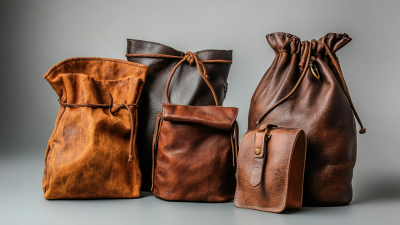
The 2024 flexible packaging industry report highlights continued demand for lightweight, space-efficient, and durable packaging solutions, with the global market projected to grow at approximately 4% annually through the end of the decade. This trend reflects changing consumer habits: outdoor users increasingly want products that reduce bulk while protecting essentials from moisture, abrasion, and unpredictable weather. The Huadi Custom 1L–10L Super Pouch Bag responds to these needs with flexible capacity options for hiking, camping, cycling, backpacking, and travel.
Available in sizes from 1L to 10L, the pouch can hold trail snacks, water bottles, clothing, picnic supplies, or compact camping equipment. Its wear-resistant and tear-proof fabric is designed to withstand friction, scratches, and demanding outdoor conditions, while the airtight, moisture-resistant seal helps keep contents dry in rain or humid environments. In line with packaging research emphasizing material efficiency and portability, its lightweight, foldable construction minimizes storage space when not in use. Customizable details also allow users to adapt the bag to different carrying preferences and activity requirements.
It combines a flexible inner bag, a fitment, and a protective outer carton. The bag holds the liquid. The carton supports stacking and blocks light and handling damage. It is more than a bag placed inside a box.
A tap or valve controls dispensing. As liquid leaves, the bag collapses and limits air replacement. This can help protect juices, sauces, syrups, wine, and detergents. Performance still depends on sealing and storage conditions.
Common applications include beverages, liquid foods, edible oils, sauces, syrups, and cleaning liquids. Aseptic versions can support shelf-stable foods. Filling, sterilization, and sealing must remain carefully controlled.
The bag usually contains several polyethylene film layers. Products sensitive to oxygen may need an additional barrier layer. Light-sensitive liquids may require stronger carton protection. Thinner film is not automatically better.
Check oxygen transmission, seal strength, fitment torque, drop resistance, and filling compatibility. Request practical trial data, not only attractive brochures. Examine batch records and test samples from production. Price alone is a weak filter.
European production often supports wine, liquid food, and industrial dispensing. North American suppliers commonly serve dairy, beverages, and foodservice. Asian markets show strong demand for water, oils, and retail products. These patterns overlap, and market estimates can vary.
It may use less material and reduce transport weight. Its flexible structure can improve shipping efficiency. However, multilayer films may complicate recycling. The environmental advantage needs end-of-life evidence.
Food-contact production should include hygiene controls, traceability, migration testing, and validated cleaning procedures. Manufacturers should test film strength, oxygen transmission, seals, and fitments. Audits should inspect real batch records. Certificates alone are not enough.
Bag In Box packaging combines a flexible inner bag with a protective outer carton, creating a lightweight, space-efficient, and practical solution for liquids such as beverages, food ingredients, sauces, household products, and industrial fluids. This article explains the structure, operating benefits, and common applications of this format, while outlining how to evaluate manufacturers through production capacity, material expertise, filling compatibility, customization services, technical support, and delivery reliability.
It also compares leading manufacturers by region and market focus without relying on brand names, highlighting key technologies such as high-barrier films, aseptic packaging, dispensing systems, automated filling, and recyclable material options. Quality control, sustainability goals, food-contact safety, traceability, and compliance with relevant international standards are essential considerations. Finally, the guide helps buyers select the right partner by matching product requirements, package size, shelf-life expectations, sustainability priorities, budget, and target market needs with a manufacturer’s capabilities.