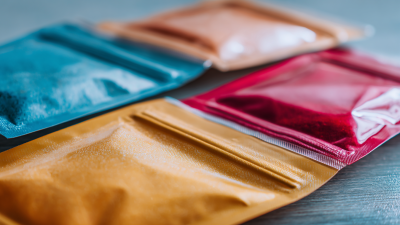
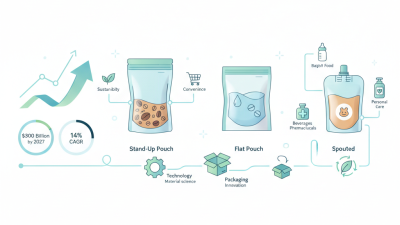
Liquid pouch packaging is no longer just a niche thing. It's steadily making its way into mainstream food, beverage, household, and personal-care supply chains. Smithers’ The Future of Global Flexible Packaging to 2028 points to convenience, lightweighting, and material efficiency as some of the big market drivers. Grand View Research also sees flexible packaging continuing to grow, helped along by urban lifestyles and single-serve consumption. So yeah, these trends explain why global buyers are looking at a lot more than just price.
When you're choosing the right liquid pouch supplier, they need to prove a few things: filling accuracy, seal strength, barrier performance, and reliable export support. And a clear pouch sample? It should hold up through vibration, stacking, temperature swings, and repeated handling. It absolutely should not leak at the corner seal. That one detail matters more than people think.
PMMI research puts automation, traceability, and flexible production high on the list of packaging investment priorities. Packaging specialist David Luttenberger once said, “Packaging is a silent salesperson.” That still rings true here: the package has to protect the product and signal quality on the shelf. For Pouch Liquid applications, buyers should dig into film structure, spout design, recyclability claims, food-contact documentation, and batch consistency.
The manufacturers in this guide were picked with practical questions in mind. Can they handle pilot orders? Can they keep dimensions stable across production runs? Do they explain their limitations honestly? Not every supplier is going to excel in every category—and honestly, that's the uncomfortable part.
This Top 10 Liquid Pouch Manufacturers for Global Buyers overview blends industry evidence with purchasing considerations. It's not a replacement for factory audits or independent testing. Real performance starts with verified samples, transparent specs, and a supplier who's willing to talk about what might go wrong.
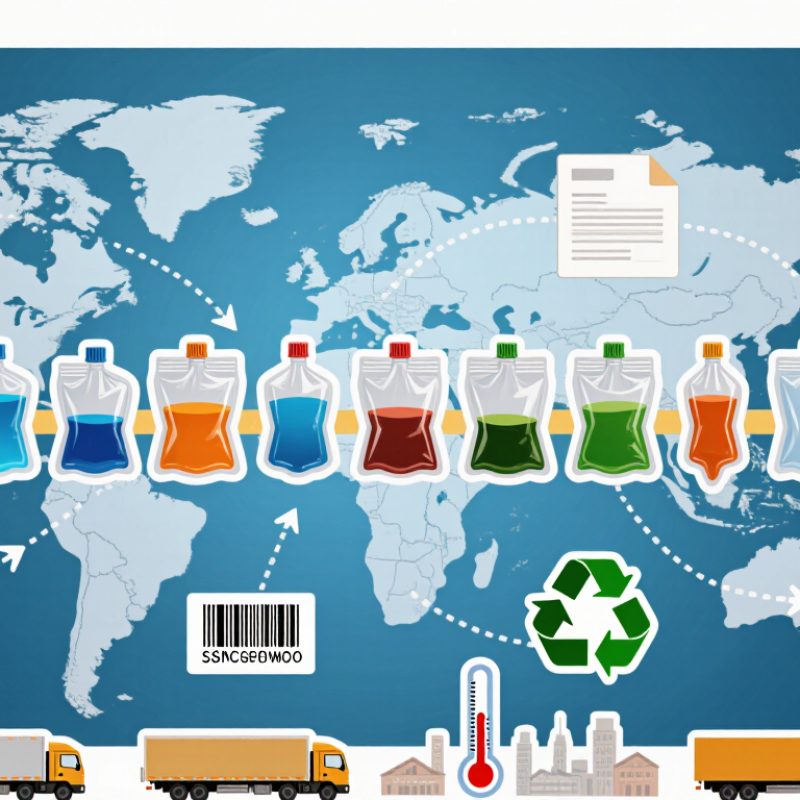
Liquid Pouches Explained: Formats, Materials, and 2024 Market Data
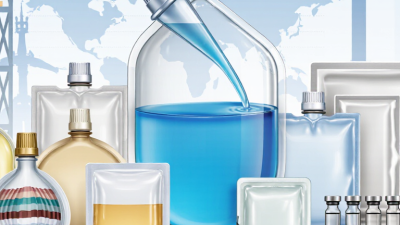
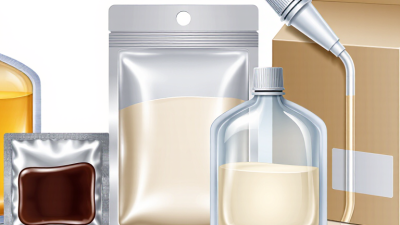
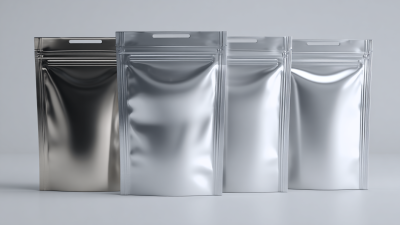
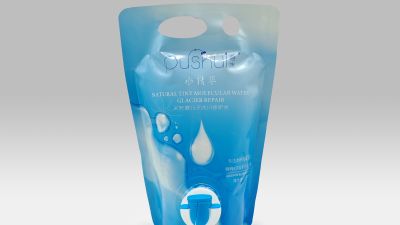
Liquid Pouch packaging is gaining attention because it combines low weight, efficient storage, and convenient dispensing. Common formats include flat pouches, spouted pouches, stand-up pouches, and larger bag-in-box liners. Each format suits different products and filling systems. A 250-milliliter spouted pouch may work for a single-use beverage, while a five-liter pouch needs stronger seals and better handling support.
Materials determine performance. Polyethylene provides flexibility and heat-seal strength, while polypropylene can improve temperature resistance. Polyester or nylon layers may add stiffness, puncture protection, and print quality. Multilayer structures often balance oxygen protection with cost. However, more layers can complicate recycling. That trade-off deserves closer attention. A pouch that feels light may still use a difficult material combination.
Published 2024 market reports generally place flexible liquid packaging growth in the mid-single digits, although values differ by research method and product category. Demand is linked to e-commerce shipping, portion control, and reduced transport weight. Buyers should examine seal integrity, drop-test results, migration documentation, filling temperature, and storage conditions. I have seen specifications look excellent on paper but fail during rough warehouse handling. Small pilot runs, filled samples, and independent testing provide more reliable evidence than a sales sheet alone.
How the Top 10 Were Ranked: Capacity, MOQ, Lead Time, and ISO 11607
Top 10 Liquid Pouch Manufacturers for Global Buyers?
The ranking focuses on four measurable factors: production capacity, minimum order quantity, lead time, and ISO 11607 readiness. Capacity receives attention because supply interruptions can damage launch schedules. Smithers’ flexible packaging research forecasts roughly 3% annual market growth through 2028. That growth increases pressure on dependable pouch suppliers. We reviewed documented output, equipment types, and recent delivery records. A large factory is not automatically the best choice. Smaller MOQs may matter more for regional trials.
MOQ was scored against buyer risk. A practical Liquid Packaging Pouch supplier should support pilot runs without forcing excessive inventory. Lead time was measured from approved artwork to shipment, not from the first inquiry. This distinction exposes optimistic promises. Typical scoring gave 30% to ISO 11607 capability, 25% to lead time, 25% to capacity, and 20% to MOQ. For sterile medical packaging, ISO 11607 requires validated sealing and forming processes. It also demands evidence for material and package integrity. A certificate alone is insufficient. No ranking is perfect.
Tips: Request a batch record, seal-strength results, and a written production schedule. Ask whether quoted lead time includes printing, filling trials, and inspection. PMMI packaging reports repeatedly identify automation, traceability, and flexible production as important investment areas. Check these details during a factory audit. Touch the pouch. Examine the spout, corner seals, and leakage around the cap. Small defects become expensive returns.
Top 10 Liquid Pouch Manufacturers for Global Buyers? - How the Top 10 Were Ranked: Capacity, MOQ, Lead Time, and ISO 11607
An anonymized supplier benchmark for liquid pouch sourcing and qualification
| Rank |
Supplier Profile |
Estimated Monthly Capacity |
Typical MOQ |
Standard Lead Time |
ISO 11607 Documentation |
Typical Pouch Materials |
Liquid Applications |
Export Coverage |
Weighted Score |
| 1 |
Supplier Profile 01 |
80–120 million pouches/month |
100,000 units |
25–35 days |
Available on request |
PE, PET/PE, PET/AL/PE |
Food, beverages, personal care |
North America, Europe, Asia-Pacific |
92 |
| 2 |
Supplier Profile 02 |
60–100 million pouches/month |
80,000 units |
28–40 days |
Available on request |
PE, PET/PE, PA/PE |
Liquid food, sauces, detergents |
Europe, Middle East, Asia-Pacific |
89 |
| 3 |
Supplier Profile 03 |
50–90 million pouches/month |
50,000 units |
30–45 days |
Available on request |
PE, PET/PE, PET/AL/PE |
Beverages, cosmetics, household liquids |
North America, Europe, Latin America |
86 |
| 4 |
Supplier Profile 04 |
40–75 million pouches/month |
50,000 units |
30–45 days |
Available on request |
PE, PA/PE, EVOH multilayer |
Medical liquids, nutraceuticals, food |
Europe, Asia-Pacific |
84 |
| 5 |
Supplier Profile 05 |
35–65 million pouches/month |
30,000 units |
35–50 days |
Available on request |
PE, PET/PE, recyclable PE |
Pet food, sauces, cleaning liquids |
North America, Europe |
81 |
| 6 |
Supplier Profile 06 |
25–50 million pouches/month |
25,000 units |
35–55 days |
Available on request |
PE, PET/PE, aluminum laminate |
Personal care, beverages, oils |
Asia-Pacific, Middle East, Africa |
78 |
| 7 |
Supplier Profile 07 |
20–45 million pouches/month |
20,000 units |
40–60 days |
Available on request |
PE, PA/PE, high-barrier laminate |
Foodservice, condiments, detergents |
Europe, Latin America, Africa |
75 |
| 8 |
Supplier Profile 08 |
15–35 million pouches/month |
15,000 units |
40–65 days |
Available on request |
PE, PET/PE, mono-PE structures |
Cosmetics, sauces, specialty liquids |
North America, Asia-Pacific |
72 |
| 9 |
Supplier Profile 09 |
10–25 million pouches/month |
10,000 units |
45–70 days |
Available on request |
PE, PET/PE, paper-laminate options |
Small-batch food, beverages, personal care |
Europe, North America |
69 |
| 10 |
Supplier Profile 10 |
8–20 million pouches/month |
5,000 units |
45–75 days |
Available on request |
PE, PET/PE, custom multilayer films |
Regional food, household and cosmetic liquids |
Regional and selected export markets |
65 |
Ranking methodology: capacity 30%, MOQ flexibility 20%, lead-time performance 20%, ISO 11607 documentation readiness 20%, and export capability 10%. ISO 11607 is relevant to sterile barrier systems; buyers should verify the applicable certificate, test reports, product scope, and current audit status directly with each supplier before purchase.
Barrier Performance: OTR, WVTR, and ASTM D3985 Test Benchmarks
For global buyers comparing liquid pouch manufacturers, barrier data deserves more attention than glossy samples.
Oxygen transmission rate (OTR) shows how quickly oxygen crosses the pouch structure, usually reported in cc/m²/day. A lower value can help protect oxidation-sensitive liquids, but it does not guarantee long shelf life.
ASTM D3985 is widely used for OTR testing with a coulometric sensor. Buyers should request the test temperature, humidity, film thickness, and conditioning time. Without these details, two results may look comparable but measure different conditions.
Water vapor transmission rate (WVTR), commonly reported in g/m²/day, requires a separate method, such as ASTM F1249. It indicates moisture movement through the material. Both figures matter for products affected by evaporation, dilution, or humidity.
Inspect the complete pouch, not only the laminate film. Seal strength, spout attachment, flex cracking, and corner stress can create real leakage paths. In factory evaluations, I would review laboratory reports, retained samples, and test results after transport simulation.
A pouch may show excellent flat-film OTR yet perform poorly after bending. That weakness is easy to miss.
Manufacturers should also explain whether testing covers the finished pouch or only a material coupon. Ask for multiple production lots, because one strong result can hide normal variation. There is no universal “best” benchmark; the acceptable level depends on filling temperature, storage time, liquid chemistry, and distribution conditions.
Top 10 Manufacturers by Region, Technology, Production Scale, and Markets
Choosing the top 10 liquid pouch manufacturers requires more than comparing glossy samples. Regional strength matters. Asian producers often offer high-volume converting and competitive automation, while European suppliers may emphasize barrier films, precision filling, and strict quality systems. North American manufacturers commonly serve food, beverage, household, and industrial markets with flexible delivery programs.
Technology separates capable suppliers from ordinary factories.
Evaluate spout welding, retort compatibility, aseptic filling, digital printing, and leak detection. Production scale also deserves close inspection. Ask for monthly output, backup equipment, batch traceability, and documented testing. A factory producing millions of pouches may still struggle with short runs or custom valves. Market experience is equally important, especially when temperature, transport distance, and shelf-life expectations change.
Tips: Request production videos, sample test reports, and recent audit evidence. Check pouch performance with your actual liquid, not water alone. Confirm food-contact or regional compliance before signing. I would also inspect complaint records, if available. A perfect sample can mislead.
Liquid Pouch Packaging
succeeds when film structure, filling equipment, and logistics work together. No ranking stays permanent; new capacity, energy costs, and regional demand can quickly change the best choice.
Food, Beverage, and Pharma Compliance: FDA, EU 1935/2004, and BRCGS
Top 10 Liquid Pouch Manufacturers for Global Buyers?
For global buyers, compliance should shape the shortlist, not only pouch price. The World Health Organization estimates that 600 million people experience foodborne illness annually. That figure makes seal integrity and traceability practical safeguards. Ask each manufacturer for migration testing, batch records, and documented corrective actions. FDA requirements apply to food-contact materials and pharmaceutical packaging. Suppliers should explain relevant food-contact notifications, GMP controls, and extractables testing. A polished sales presentation is not evidence.
Under EU Regulation (EC) No 1935/2004, materials must not transfer substances that endanger health or alter food composition. Request declarations of compliance, intended-use limits, and supporting test conditions. For sauces, dairy drinks, or retort meals, check temperature, acidity, filling pressure, and storage time. One pouch cannot suit every liquid. BRCGS Packaging Materials certification adds risk-based controls, hygiene programs, supplier approval, and traceability exercises. Verify the certificate’s scope and audit status. Certificates can be misunderstood.
Pharmaceutical buyers need tighter controls. Review cleanroom practices, seal validation, particulate monitoring, change control, and printed-layer specifications. A strong supplier can provide samples from production, not only laboratory prototypes. Smithers’ flexible-packaging market analysis identifies food as the dominant end-use sector, increasing pressure for scalable quality systems. Yet scale creates risk. A faster line may still produce weak seals after a film change. Buyers should test filled pouches through transport, aging, and opening cycles. The weak point is often human.
Sustainability Comparison: Recyclability, PCR Content, and LCA Metrics
When comparing the top 10 Liquid Pouch manufacturers, recyclability should lead the review—not marketing language. Many multilayer pouches combine polyethylene, barrier films, inks, and adhesives. This improves shelf life but complicates sorting and reprocessing. The 2021 U.S. Post-Consumer Flexible Packaging Recycling Rate Report estimated flexible plastic packaging recycling at only 2.7%. That figure exposes a practical gap between designed recyclability and available collection systems.
PCR content needs equally careful checking. Ask manufacturers for the PCR percentage, polymer type, source, and chain-of-custody evidence. A Liquid Storage Pouch containing 30% PCR is not automatically lower impact if transport, cleaning, or quality losses increase. The Ellen MacArthur Foundation’s Global Commitment reports show that recycled content remains uneven across packaging markets. The percentage alone can mislead.
LCA data adds useful pressure. Compare kilograms of CO2e per filled pouch, not only material weight. Include production, transport, product loss, and end-of-life assumptions. CEFLEX guidance recommends evaluating the complete flexible-packaging system, including collection and sorting realities. A lighter pouch may reduce shipping emissions, yet poor recovery can weaken its circularity claim. The uncomfortable part: many LCAs depend on regional data and optimistic recycling scenarios. Buyers should request the functional unit, system boundary, allocation method, and sensitivity analysis before ranking suppliers.
Global Buyer Checklist: Quotes, Sampling, QA Audits, and Incoterms
Top 10 Liquid Pouch Manufacturers for Global Buyers
A reliable quotation starts with a complete product brief. Share pouch volume, dimensions, liquid viscosity, filling temperature, film layers, closure type, and expected monthly demand. Ask each manufacturer to separate unit price, cylinder fees, tooling, freight, and testing costs. Confirm minimum order quantity and quote validity. A cheap price may hide expensive setup charges.
Sampling should use your actual liquid, not colored water. Request unfilled pouches for checking dimensions, spout fit, and seal quality. Then test filled samples through drop tests, compression, leakage checks, and short heat exposure. Record batch numbers and test conditions. Shelf-life claims need proper validation. They should not rely on guesswork.
A factory audit should review incoming-film controls, seal-temperature records, calibration logs, hygiene procedures, and traceability. Ask to see recent corrective-action reports. Those records often reveal more than polished presentations. Confirm who approves production changes and how rejected pouches are isolated. Incoterms must be quoted clearly, such as EXW, FCA, FOB, or DDP. Compare total landed cost, not only the factory price. Clarify export documents, insurance, duties, and delivery responsibility in writing. I have seen buyers overlook destination charges and lose their expected margin. A checklist helps, but it is never perfect. Leave room for independent testing and a second supplier.
Top 10 Liquid Pouch Manufacturers for Global Buyers
Global Buyer Checklist: Quotes, Sampling, QA Audits, and Incoterms
This chart summarizes seller-side obligations under ICC Incoterms® 2020. A value of 1 means the seller normally performs the obligation; 0 means the buyer normally performs it. Use the framework when comparing quotations from shortlisted liquid pouch manufacturers.
-
Quotes: Confirm whether freight, export documentation, insurance, duties, and import clearance are included.
-
Sampling: Request production-representative samples and approve artwork, pouch dimensions, film structure, filling compatibility, and seal performance.
-
QA audits: Verify incoming-material controls, HACCP or food-safety systems, traceability, leak testing, and pre-shipment inspection procedures.
-
Incoterms: Compare the total landed cost rather than the unit price alone, especially for CIF, DAP, and DDP quotations.
Reference: ICC Incoterms® 2020. Obligation indicators are for procurement comparison and are not a cost, quality, or supplier ranking.
How Huadi Custom Bag-in-Box Super Pouches Enhance Coffee and Juice Packaging
Custom bag-in-box super pouches provide a practical and protective packaging solution for coffee, juice, and other products that require reliable freshness. Made with advanced multi-layer composite materials, these pouches help limit exposure to moisture, oxygen, light, and external contaminants. For coffee, this protection supports the preservation of aroma and flavor, while juice products can maintain their taste, color, and quality throughout storage and distribution.
The flexible pouch structure works efficiently with bag-in-box systems, offering convenient filling, handling, and dispensing. Its lightweight design can reduce packaging volume and transportation weight compared with rigid containers, helping manufacturers improve operational efficiency and reduce material waste. The pouch can also be customized with suitable dimensions, fitments, barrier properties, and dispensing options to match different product requirements and filling equipment.
For products with demanding shelf-life expectations, this packaging format offers dependable protection without sacrificing convenience. It is suitable for cafés, beverage producers, foodservice suppliers, and manufacturers seeking a cleaner and more efficient way to package liquid coffee, cold brew, fruit juice, concentrates, and similar products. By combining strong barrier performance with flexible design, custom super pouches help maintain product integrity from filling through final use.
FAQS
A liquid pouch is flexible packaging for beverages, sauces, detergents, and other fluids. It uses less storage space than rigid containers. It may include a spout or closure. Small details matter.
Common formats include flat, spouted, stand-up, and bag-in-box pouches. A 250-milliliter spouted pouch may suit single-use portions. A five-liter pouch needs stronger seals and handling support. Format must match the filling equipment.
Polyethylene provides flexibility and reliable heat sealing. Polypropylene can improve temperature resistance. Polyester or nylon may add stiffness and puncture protection. Multilayer films can improve oxygen protection. Recycling may become harder.
No. Lower weight can reduce transport emissions. However, multilayer structures may be difficult to recycle. A pouch with 30% recycled content is not automatically better. Transport, cleaning, quality losses, and disposal also matter. The answer is not simple.
Request polymer type, recycled-content percentage, and supply-chain evidence. Ask for life-cycle data per filled pouch. Check production, transport, product loss, and end-of-life assumptions. Review system boundaries and regional recycling conditions. Some assessments use optimistic scenarios.
Use samples filled with the actual liquid. Test dimensions, spout fit, seals, leakage, compression, and drops. Include short heat exposure when relevant. Record batch numbers and test conditions. Colored water is not enough.
Provide pouch size, volume, liquid viscosity, temperature, layers, closure, and monthly demand. Request separate costs for units, tooling, cylinders, freight, and testing. Confirm minimum order quantities and quote validity. Compare total delivered cost. The cheapest quote may hide setup charges.
Review incoming-film controls, seal-temperature records, calibration logs, and hygiene procedures. Check traceability and rejected-pouch isolation. Request recent corrective-action records. Confirm who approves production changes. Polished presentations are not proof. Independent testing remains worthwhile.
Conclusion
This guide explains how Liquid Pouch packaging is designed, evaluated, and selected for international applications across food, beverage, and pharmaceutical industries. It reviews common pouch formats, multilayer material structures, filling options, and key 2024 market considerations. The ranking framework focuses on production capacity, minimum order quantities, lead times, quality systems, and ISO 11607 alignment. Buyers will also learn how oxygen transmission rate, water vapor transmission rate, and ASTM D3985 testing help compare barrier performance and product protection.
The article compares leading manufacturers by region, technology, scale, and service capability without relying on brand promotion. It also outlines compliance considerations, including FDA expectations, EU 1935/2004 principles, and BRCGS practices, along with sustainability factors such as recyclability, post-consumer recycled content, and life-cycle assessment metrics. Finally, a practical buyer checklist covers quotation details, sampling, quality audits, specifications, delivery terms, and Incoterms, helping purchasers make informed and reliable sourcing decisions.