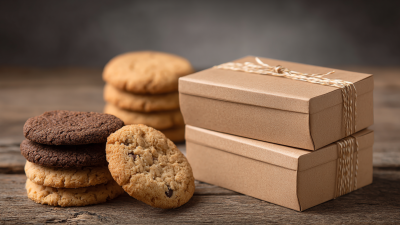
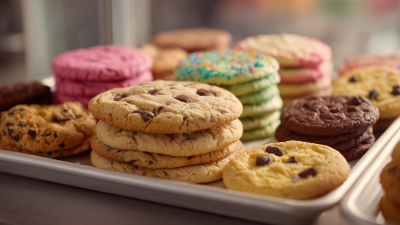
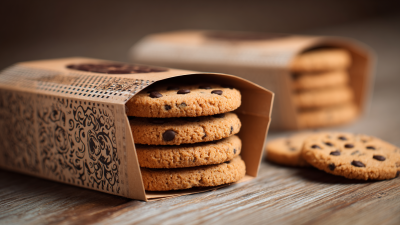
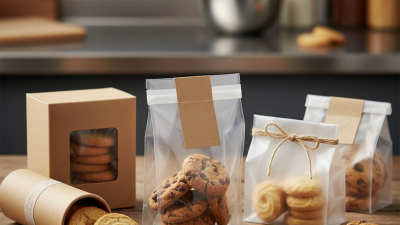
Honestly, choosing the right cookie packaging does a lot more than you might think. It helps keep cookies fresh, builds trust with customers, and yes, can even bring people back for more. It also plays a part in how shoppers remember your brand. But here's the thing: packaging has to protect the cookies first—looking pretty comes second. So think about moisture control, whether the cookies are visible, how well it holds up in transit, and how easy it is to open. Because a gorgeous box doesn't mean much if the cookies show up broken.
So, this guide is really about the practical choices bakery teams, packaging specialists, and small food brands make every day. Say you run a bakery—you might find yourself comparing kraft pouches, rigid boxes, tins, and window cartons. Each one gives customers a slightly different feel when they pick it up. A Bag Cookie format can work well for soft cookies, gift sets, or small retail portions. That said, you still need to test the seal, the barrier layer, and the closure carefully. And don’t skip this: touch the material. Hey, just make sure the seal's all good, okay? And keep an eye out for crumbs, too.
When it comes to cookie packaging you can count on, it really needs to fit the product, the people you're selling to, your budget, and where you're selling it. A fancy gift box can be a great move for holiday orders, sure—but if it uses too much unnecessary material, it might actually make customers trust your brand less. A plain pouch, on the other hand, may not look like much, but it often holds up better in shipping. And don't overlook the practical stuff: whether the packaging is safe for food contact, whether the labels are clear, and where the materials come from. These things are worth having a professional look at. Rules also vary from market to market, so it's smart for brands to double-check the latest guidance with a qualified supplier or local authority.
When you actually test things, you tend to find the stuff nobody loves talking about. Maybe the ink scuffs. A ribbon ends up slowing down packing. Or a window fogs up after a temperature shift. Honestly? No package is perfect. The best choice usually comes from juggling protection, looks, cost, and practicality. Sure, your brand should stand out — but it also has to survive a busy packing table. That's the balance that makes packaging feel credible.
Define Your Brand’s Cookie Packaging Goals
Before choosing packaging, define what your cookie business needs most. Freshness, protection, visibility, and easy handling may each matter differently. A soft cookie needs stronger moisture protection than a dry biscuit. A delicate decorated cookie may need extra space and internal support. Your goals should guide the format, material, closure, and size of your Cookie Bags.
Think about the customer’s real experience. Can they open the bag without crushing the cookies? Does the package stand upright on a crowded shelf? Is the seal reliable during delivery? Test filled samples in warm, cold, and humid conditions. Review the results with your packaging supplier, and request food-contact documentation and performance data. A package can look attractive but still fail under pressure. That mistake is easy to make.
Tips: Write three packaging goals before comparing suppliers. Measure cookies after cooling, not while warm. Test the seal several times. Check whether the printed surface scratches during transport. Ask for recyclable or lower-material options, but verify the claim carefully. “Eco-friendly” sounds useful, yet it may lack clear evidence. I would also leave a small budget for testing. Early samples often reveal problems that product photos hide.
Compare Cookie Packaging Materials and Formats
Choosing cookie packaging starts with product behavior, not appearance.
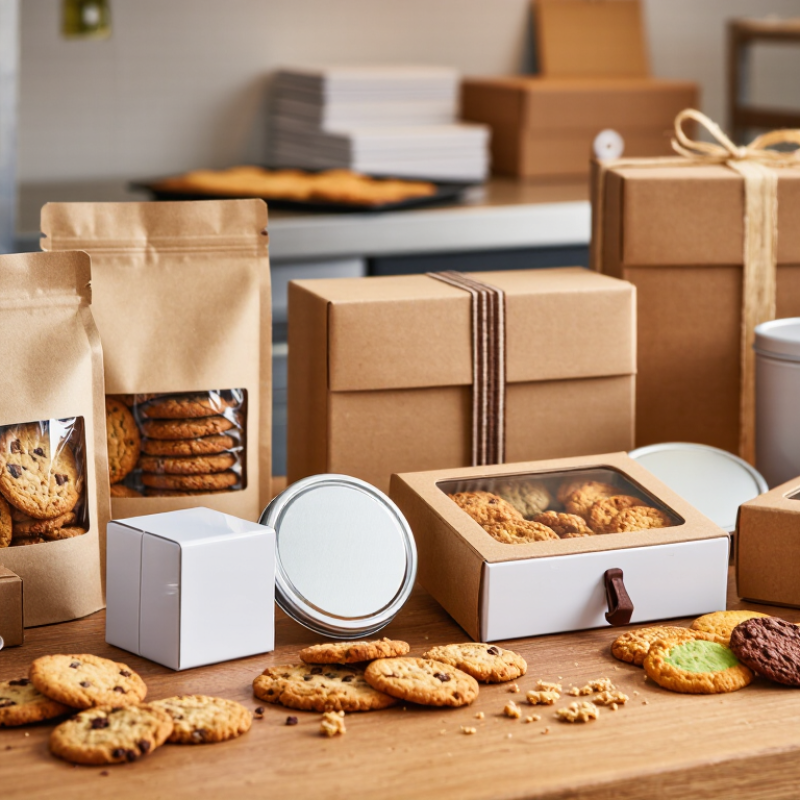
In small-batch packaging trials, crisp cookies softened when paperboard lacked an inner barrier. Paperboard boxes feel premium, print well, and stack neatly, but they need a moisture-resistant lining. Clear plastic pouches display texture and support heat sealing, yet they can look less distinctive and raise recycling questions. A
Cookie Pouch
with a reliable seal suits assorted cookies, especially when freshness matters during delivery. Metal tins protect delicate shapes and invite reuse, but their weight increases shipping costs.
Format changes the customer experience.
A tuck-end box works well for gifting and controlled portions. A window box adds visibility, though the window may complicate material separation. Stand-up pouches save shelf space and use less material than rigid containers, but cookies can break without internal support. Trays inside cartons create orderly layers; they also add components.
Test drop resistance, seal strength, aroma retention, and condensation before approving artwork. One overlooked detail: greasy fillings can stain uncoated paper quickly.
Tips:
Match the barrier to the recipe. Test after transport. Check the seal by hand. Leave headspace for fragile cookies. Ask suppliers for food-contact documentation and clear recycling guidance. Attractive packaging can still fail when labels peel in a cool storeroom. That lesson is easy to miss. Compare samples under real humidity, temperature changes, and handling conditions.
Match Packaging Design with Your Brand Identity
How to Choose the Best Cookie Packaging for Your Brand?
Your cookie box should feel like your brand before customers taste anything. Start with three identity signals: color, texture, and structure. A calm, natural identity may suit uncoated paper, muted tones, and a simple sticker. A playful identity could use bright colors, rounded typography, and a window showing uneven, handmade cookies. Keep the design consistent across boxes, pouches, labels, and shipping cartons. Small mismatches can weaken recognition.
Packaging also needs to fit the product experience. Rigid boxes suggest gifting, while resealable pouches support everyday snacking. Test the opening action with real users. If crumbs scatter across a table, the design needs work. I have found that attractive packaging sometimes ignores storage, grip, or freshness. That is an easy mistake.
Consumer expectations support this balance. McKinsey’s 2020 global packaging survey found that 60–70% of consumers were willing to pay more for sustainable packaging. Yet sustainability claims need evidence, not vague green language. Choose materials that match your supply chain, printing process, and disposal access. The Sustainable Packaging Coalition also emphasizes that packaging should be evaluated through its full system, including sourcing, use, and end-of-life. A beautiful compostable pouch may fail if local facilities cannot process it. Check the details. Your packaging should express personality, protect texture, and remain believable in the customer’s hands.
Evaluate Protection, Freshness, and Product Safety
How to Choose the Best Cookie Packaging for Your Brand?
A cookie package must protect delicate edges during filling, transport, and display. Test it with realistic handling, not only clean warehouse conditions. Drop-filled cartons, stacked cases, and sudden temperature changes reveal weak points quickly. A rigid inner tray can reduce breakage, but it may increase material use. Heavier does not always mean safer. Check whether the package holds its shape after repeated pressure.
Freshness depends on controlling moisture, oxygen, light, and heat. Crisp cookies need strong moisture resistance, while soft cookies require a package that limits drying. Measure texture and aroma during shelf-life trials. Do not rely on appearance alone. A clear window may improve sales, yet light can affect color and flavor over time. Seal quality matters too. Tiny gaps can quietly reduce freshness before the printed date.
Product safety begins with food-contact materials and reliable sealing processes. Request supplier documents showing material suitability, production controls, and batch traceability. Inspect adhesives, coatings, and printing areas carefully, especially when they sit near food. A tamper-evident feature can show unwanted opening, but it cannot replace hygienic handling. Review the package after filling, transport, and storage. Real conditions are messy. A design that performs perfectly in a sample test may still need adjustment during high-speed production.
How to Choose the Best Cookie Packaging for Your Brand?
Comparative evaluation of common cookie packaging formats across protection, freshness, food safety, sustainability, and cost.
The scores use a 1–10 decision scale, where 10 indicates stronger performance. Protection and freshness consider resistance to moisture, oxygen, light, and physical damage; food safety reflects the suitability of sealed food-contact packaging when properly specified and manufactured. Actual performance depends on material grade, seals, storage conditions, and regulatory compliance.
Reference framework: FDA food-contact packaging principles, ASTM packaging test methods, and ISO 22000 food-safety management practices.
Balance Packaging Costs, Sustainability, and Scalability
Choosing cookie packaging is a cost decision, but it is also a materials decision. Start by measuring the product’s real needs: moisture barrier, grease resistance, impact protection, and shelf life. A thin Cookie Pouches format may reduce shipping weight, while a rigid carton can improve stacking and presentation. It may not be cheaper. Run a small production trial before committing to large tooling or minimum orders.
Sustainability requires evidence, not attractive claims. The United Nations Environment Programme’s 2023 report identifies packaging as a major source of single-use plastic waste. The U.S. Environmental Protection Agency reported 82.2 million tons of containers and packaging waste in 2018. These figures make material reduction valuable, but lightweight packaging can fail if cookies break or spoil. Replacement costs and wasted food may outweigh savings. That detail is easy to miss.
Scalability also depends on equipment compatibility. Test pouch sealing temperatures, filling speeds, carton dimensions, and warehouse stacking before expanding. Smithers’ The Future of Sustainable Packaging to 2028 highlights continued growth in recyclable and lower-material packaging demand, yet infrastructure differs by market. A mono-material pouch may support simpler recycling claims, but local collection systems still matter. Ask suppliers for barrier testing, food-contact documentation, recycled-content evidence, and batch consistency. The perfect package probably does not exist. A practical design balances protection, price, and measurable environmental performance.
Test, Refine, and Select the Best Packaging Solution
Choosing cookie packaging should begin with testing, not assumptions. I recommend creating three to five prototypes with different materials, closures, and window sizes. Record each trial under “1 Packaging” and note its cost, weight, appearance, and sealing method. Keep the cookies identical during every test.
Test packages after filling them with real cookies. Check freshness after one day, one week, and two weeks. Inspect crumbs, oil marks, broken edges, and changes in texture. Shake each package gently, then stack it with similar boxes. A weak corner can ruin an otherwise attractive design. Test the seal too. Small gaps may appear only after transport.
Refinement should follow evidence, not personal preference. Ask customers to open the package while wearing gloves or with one hand occupied. Their hesitation can reveal a poor closure. Measure how quickly staff can pack each format. Packaging that looks premium may slow production or create unnecessary waste. I once favored a beautiful box that collapsed under light pressure. That mistake was useful. Recheck food-contact suitability, print durability, and moisture protection with qualified suppliers. Then compare the strongest options by total performance, not appearance alone. The best choice should protect texture, communicate quality, and remain practical during daily handling.
How to Choose the Best Cookie Packaging for Your Brand? - Test, Refine, and Select the Best Packaging Solution
Comparison of common cookie packaging formats using practical performance, cost, sustainability, and customer-experience criteria.
| Evaluation Dimension |
Stand-Up Pouch with Zipper |
Metal Tin |
Folding Carton with Inner Bag |
Rigid PET Jar |
Paper-Based Pouch |
| Typical product capacity |
150–500 g |
150–500 g |
100–400 g |
200–700 g |
100–400 g |
| Moisture and oxygen protection |
High with a suitable multilayer film |
Very high with a tight lid and liner |
High when the inner bag is properly sealed |
High with an induction seal and suitable closure |
Medium to high, depending on barrier coating |
| Resealability after opening |
Excellent |
Good if the lid remains tightly fitted |
Limited unless the inner bag has a zipper |
Excellent |
Good if fitted with a reliable zipper |
| Protection against breakage |
Medium; flexible material provides limited impact protection |
Very high |
High with internal cushioning or a fitted tray |
High |
Medium |
| Typical empty-pack weight |
Approximately 8–20 g |
Approximately 70–180 g |
Approximately 25–60 g |
Approximately 35–90 g |
Approximately 12–30 g |
| Indicative packaging cost per unit* |
US$0.10–0.35 |
US$0.45–1.50 |
US$0.25–0.80 |
US$0.30–1.00 |
US$0.18–0.60 |
| Shipping and storage efficiency |
Excellent; lightweight and space-efficient |
Low to medium; heavier and less nesting-efficient |
Good |
Medium |
Good |
| Material recovery consideration |
Often difficult to recycle when made from multiple bonded layers |
Steel is widely recyclable where collection systems exist |
Paperboard is commonly recyclable; inner bag may require separate handling |
PET is widely recyclable where suitable collection exists; closure may differ |
Recyclability depends on coatings, adhesives, and local facilities |
| Shelf-appeal and print area |
Large printable surface with strong color impact |
Premium appearance with durable decoration options |
Excellent print quality and broad design flexibility |
Good visibility and strong product-presence effect |
Natural appearance with suitable print limitations |
| Best fit for testing |
Everyday snacks, e-commerce, and frequent repurchase |
Premium gifts, seasonal products, and reuse-oriented formats |
Retail shelves and products requiring extensive information panels |
Large formats, family packs, and high visibility |
Sustainability-led concepts requiring verification of local recovery options |
Recommended test sequence:
Compare at least three formats using the same cookie recipe, fill weight, seal conditions, and distribution route. Record seal integrity, moisture pickup, breakage rate, package weight, opening experience, storage efficiency, and total delivered cost before selecting the final solution.
*Cost ranges are indicative estimates for standard food-contact packaging in moderate production volumes. Actual prices vary with material structure, dimensions, printing, closures, order quantity, tooling, freight, and regional requirements. Recyclability claims should always be checked against the destination market's collection and sorting infrastructure.
2L Handle Valve Refill Pouches: Insights from Smithers’ Global Flexible Packaging Report
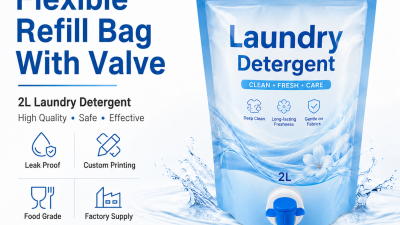
The global flexible packaging market is increasingly moving toward practical refill formats that combine convenience, material efficiency, and reliable product protection. A 2L leak-proof valve refill pouch with a carry handle responds to these needs by offering an easy-to-use alternative to rigid containers for laundry detergent, fabric softener, and household cleaners. Its flexible structure helps reduce storage volume, while the integrated handle supports comfortable lifting, pouring, and transportation in everyday use.
Designed for demanding household applications, the pouch features a secure valve system to minimize leakage during filling, shipping, and dispensing. Food-grade packaging materials provide a high standard of cleanliness and product contact safety, while ISO and BRC certification support consistent manufacturing and quality control. The pouch can also be customized with printed logos, product information, and visual designs, helping businesses create clear shelf presentation and strengthen product recognition. With factory supply capabilities and flexible customization options, this refill pouch is suitable for brands and distributors seeking a convenient, durable, and more resource-conscious packaging solution.
FAQS
Measure moisture protection, grease resistance, impact protection, and shelf-life needs. Packaging must protect real cookies, not just look attractive. A thin pouch may reduce shipping weight. A rigid carton may stack better. It may cost more.
Small trials reveal sealing, stacking, filling, and transport problems. Create three to five prototypes with different materials and closures. Keep the cookies identical during every test. Large orders can make mistakes expensive.
Check freshness after one day, one week, and two weeks. Inspect crumbs, oil marks, broken edges, and texture changes. Shake each package gently. Small gaps may appear later.
Test sealing temperature, filling speed, carton dimensions, and warehouse stacking. Measure how quickly staff pack each format. A beautiful package may slow production. That matters daily.
Request evidence for recycled content, barrier performance, food-contact suitability, and batch consistency. Consider material weight and local recycling systems. Lighter packaging is not always better. Spoiled cookies create extra waste.
Not necessarily. It may simplify material claims, but collection systems differ by market. Confirm local recycling access before making environmental statements. Attractive claims need evidence.
Compare material price, shipping weight, labor speed, tooling, waste, and replacement losses. A cheaper package may break cookies or shorten freshness. Total performance matters more than purchase price.
Customers should open it easily, even with one hand occupied. Watch for hesitation, torn seals, or messy closures. Ask for direct feedback. My preferred design might still fail real users.
Do not choose packaging based on appearance alone. A rigid box can collapse under light pressure. A thin pouch can develop weak seals. Test real cookies under realistic handling. Imperfections are useful warnings.
Conclusion
Choosing the right Cookie Packaging begins with clearly defining your brand’s goals, target customers, product type, and sales channels. Compare materials such as paperboard, plastic, metal, and flexible film, while considering formats including boxes, pouches, tins, and trays. The packaging should reflect your brand identity through suitable colors, typography, structure, and finishing details without reducing usability. At the same time, it must protect cookies from moisture, crushing, contamination, and loss of freshness throughout storage and transportation.
A successful packaging solution also requires careful attention to cost, sustainability, production efficiency, and future growth. Consider material availability, minimum order quantities, shipping requirements, recyclability, and the practicality of large-scale production. Before making a final decision, create samples and test them for durability, sealing performance, appearance, customer convenience, and product preservation. Use the results to refine the design and select packaging that balances visual appeal, protection, affordability, environmental responsibility, and long-term scalability.